Knowledge Hub
Compare prebiotics, probiotics, and postbiotics.
Prebiotics
Definitions, biological roles, and references for prebiotics.
View Prebiotics →Probiotics
Definitions, biological roles, and references for live probiotic microorganisms.
View Probiotics →Postbiotics
Definitions, components, and scientific references for postbiotic preparations.
View Postbiotics →Knowledge Hub
Explore the science behind prebiotics, probiotics, and postbiotics—three distinct approaches to supporting gut health and overall wellness.
WHAT ARE POSTBIOTICS?
Postbiotics are defined as a preparation of inanimate microorganisms and/or their components that confers a health benefit on the host, distinguishing them from probiotics which must be alive at administration.
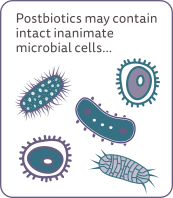
Inanimate
Microbial Cells
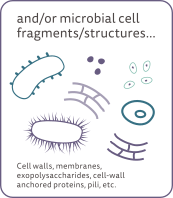
Microbial Cell
Fragments
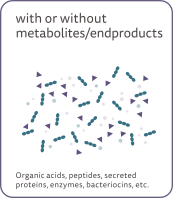
Metabolites
This definition captures intact or fragmented microbial cells and associated bioactive constituents produced during fermentation, while excluding purified single chemicals, vaccines, and viruses.(Reference: ISAPP)
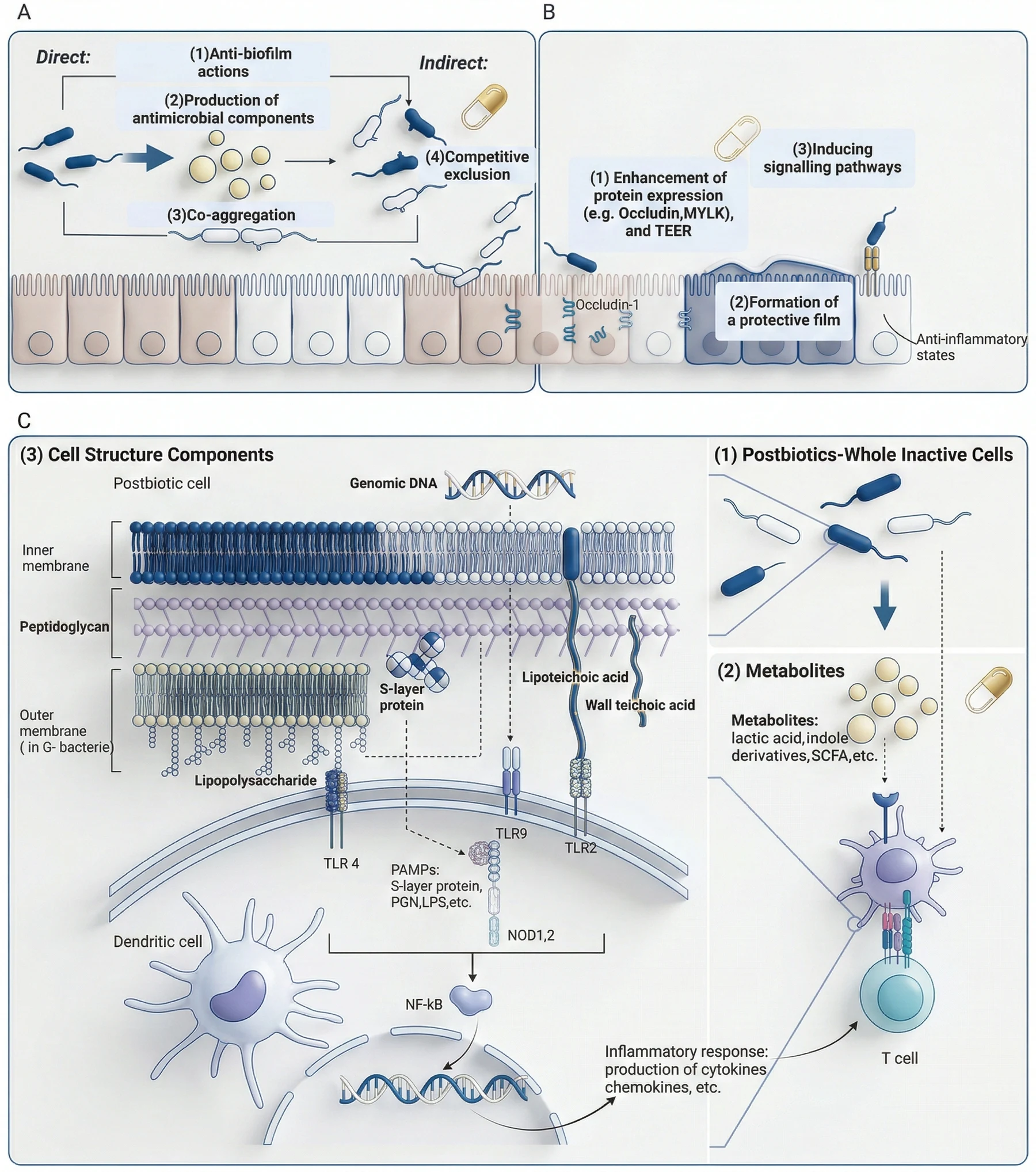
HOW THEY WORK
MODULATE RESIDENT MICROBIOTA
Directly balances intestinal flora through antimicrobial metabolites while promoting the production of beneficial short-chain fatty acids.
ENHANCE EPITHELIAL BARRIER INTEGRITY
Strengthens the gut lining, upregulates tight-junction proteins, and reinforces the protective epithelial barrier.
CALIBRATE IMMUNE RESPONSES
Interacts directly with mucosal immune cells to calibrate inflammatory signals and fine-tune host defense mechanisms.
IMPACT METABOLIC PATHWAYS
Influences host metabolism and modulates key physiological signaling axes, including gut-brain and gut-liver pathways.
SAFETY, QUALITY & THE BOTTOM LINE
SAFETY YOU CAN TRUST
FAVORABLE SAFETY PROFILE:
Non-replicating microbial cells eliminate the risk of bacterial translocation.
TOXICITY TESTING:
Three-strain postbiotic powder demonstrated no adverse findings in acute and 90-day subchronic toxicity tests, with no detectable biogenic amines.
REGULATORY GUIDANCE:
Global consensus frameworks emphasize strain-level identification, documented inactivation processes, and strict GMP adherence.
QUALITY & LABELING CUES
LOOK FOR:
- • Progenitor genus–species–strain
- • Postbiotic type
- • Quantification units
- • Guaranteed amounts through shelf life
DISCLOSURE:
Documented intentional inactivation and standardized enumeration methods across all manufacturing batches.
ALIGNMENT:
Full adherence to the 2021 ISAPP scientific consensus definition for postbiotics.