Prebiotics
Definitions, biological roles, and references. Findings depend on the preparation studied.
WHAT ARE PREBIOTICS?
Prebiotics are substrates that are selectively utilized by host microorganisms, conferring a health benefit.
SELECTIVE FERMENTATION
Prebiotics are not digested by the host but are fermented by beneficial gut bacteria, promoting their growth and activity.
HEALTH BENEFITS
Support digestive health, enhance mineral absorption, modulate immune function, and may influence metabolic health.
COMMON TYPES
Inulin, fructooligosaccharides (FOS), galactooligosaccharides (GOS), and resistant starches are well-studied prebiotics.
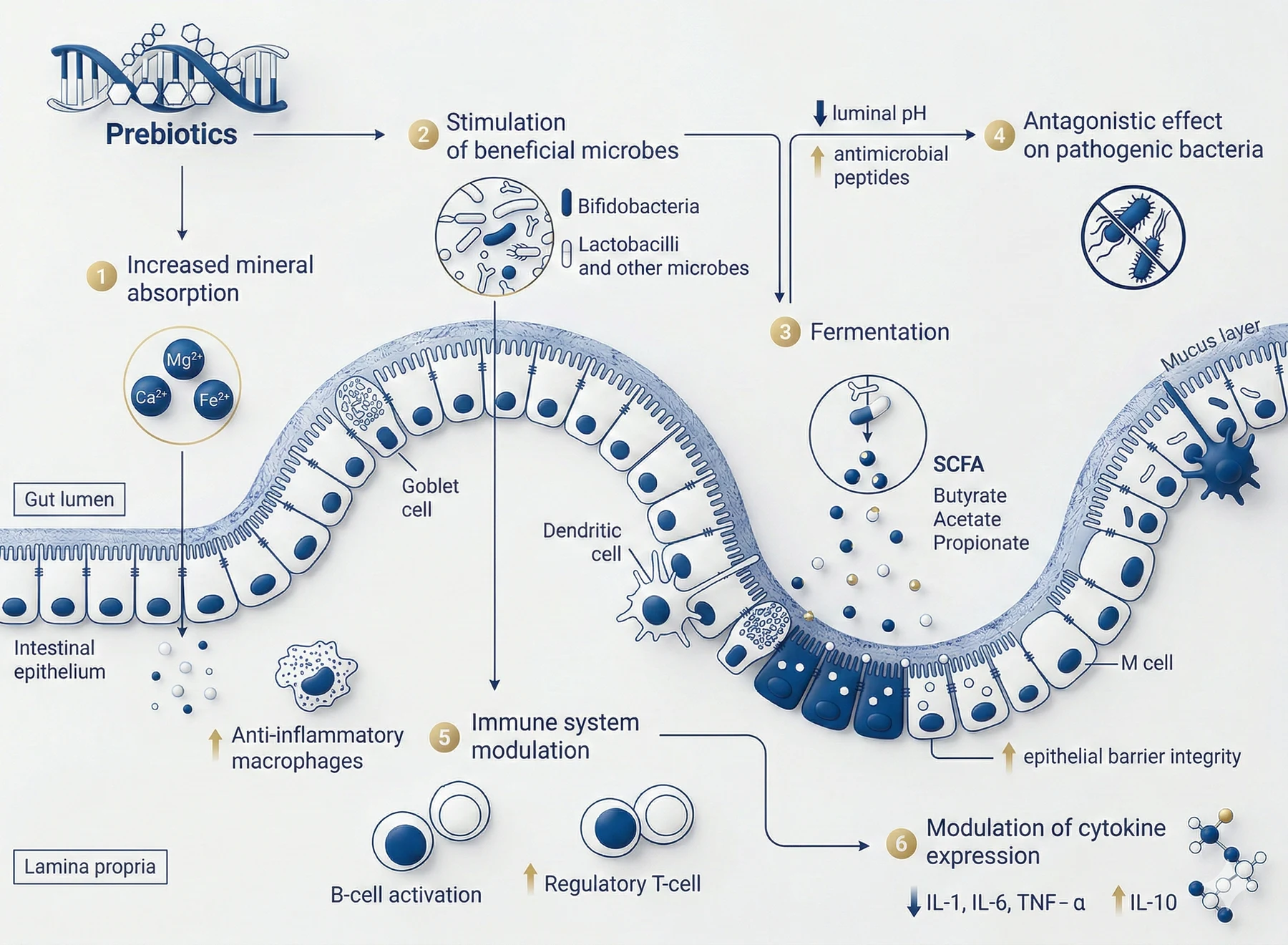
Mechanisms of Prebiotic Action
- ↑Mineral Absorption: Improves solubility and uptake of Ca2+, Fe2+, and Mg2+.
- ↑Beneficial Microbes: Provides selective substrates to promote healthy gut flora growth.
- ↑SCFA Production: Generates energy for colonocytes and supports mucosal integrity.
- ↓Pathogen Growth: ↓ Luminal pH and ↑ antimicrobial peptide production.
- Immune Modulation: ↑ Epithelial barrier integrity, ↑ dendritic cell/B-cell activity, and T-reg differentiation.
- Cytokine Regulation: ↓ Pro-inflammatory markers (IL-1, IL-6, TNF-α) and ↑ anti-inflammatory IL-10.
Reference: Nutrients 2026, 18(3), 372